Best Upper Body Workout for Male Attraction: Build a Powerful Physique (2026)
Discover the most effective upper body exercises to build a physique that commands attention and increases sexual attraction. This guide covers proven movements for chest, arms, and shoulders.
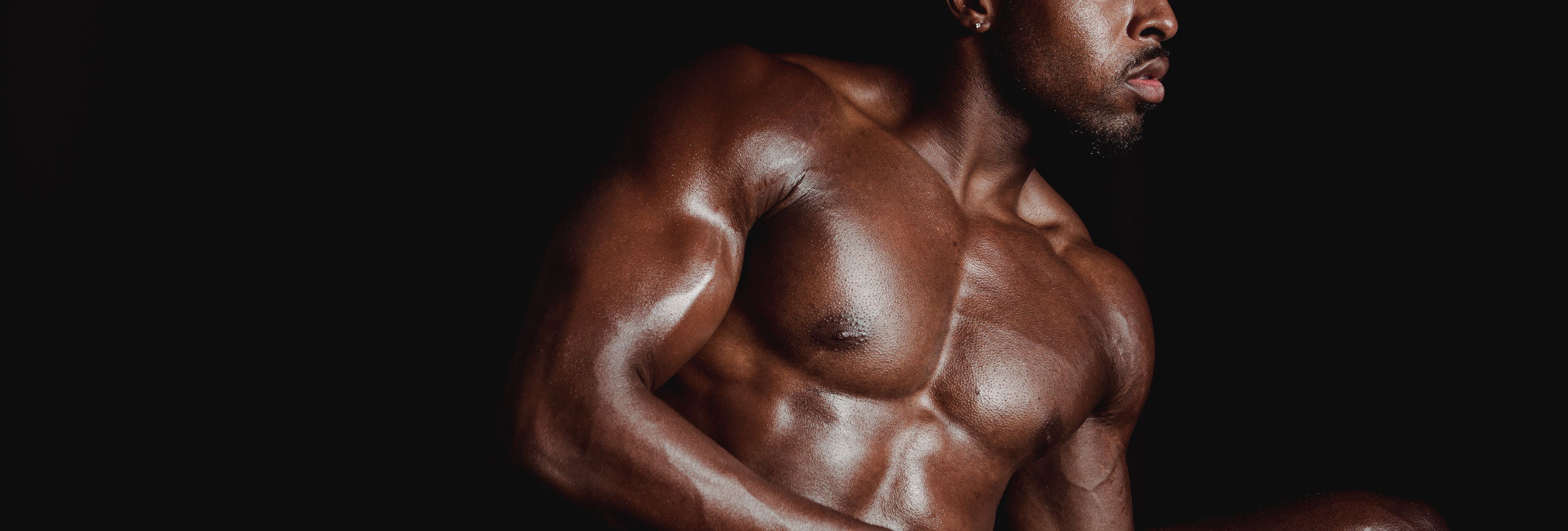
Your Upper Body Is the First Thing People Notice
Walk into any room and watch where eyes land. The shoulders, the chest, the arms. Your upper body creates the silhouette that registers in people's minds before a single word is spoken. This is not vanity. This is how human attraction works at a neurological level. Broad shoulders signal dominance, strength, and healthy hormone levels. A developed chest suggests physical capability. Capable arms complete the picture of someone who lives in their body rather than just occupying it.
Most men train their upper bodies haphazardly. They chase big lifts without understanding how the muscles actually build and display. They overtrain some areas while leaving obvious gaps. They waste years on routines designed for professional athletes rather than for the man who wants to look noticeably better in shirts and bare-chested. This article is the protocol for building an upper body that actually reads as attractive, not just strong.
The science is straightforward. Upper body attractiveness correlates with shoulder width relative to waist size, chest development that creates a V-taper, and arm size that suggests functional strength without looking inflated. These are achievable goals for any man willing to follow a structured program, eat appropriately, and be patient with the process. No genetics required. Just discipline.
The Anatomy of an Attractive Upper Body
Before discussing exercises, you need to understand what you are actually building. The muscles that contribute most to male upper body attractiveness are the pectorals, the deltoids, the trapezius, the latissimus dorsi, and the biceps with triceps. Each plays a specific role in creating that broad-shouldered, narrow-waisted silhouette that registers as dominant and attractive.
The pectorals create the chest shelf that fills out shirts and looks commanding without a shirt. Most men neglect the inner chest and lower chest, focusing on what they can see in the mirror from a front double biceps pose. This creates an incomplete look. Your chest needs to have depth at the sternum and fullness at the lower portion to look fully developed from any angle.
The deltoids build the shoulder width that creates the V-taper. The lateral deltoid is the most important head for width. The anterior deltoid gets plenty of work from pressing movements. The posterior deltoid is almost always undertrained and this creates rounded shoulders and poor posture. A balanced shoulder program addresses all three heads, not just the ones that make you feel strong in the moment.
The trapezius adds thickness to the upper back when viewed from the front and creates neck support that reads as strength. The latissimus dorsi creates the width of the back when viewed from behind and contributes to that V-shape when viewed from the front. The arms, both biceps and triceps, complete the picture and determine whether your upper body looks finished or unfinished.
Understanding this anatomy is the foundation. Every exercise choice, every rep, every set should serve these muscles in the proportions that create an attractive upper body. Random training without this framework leads to imbalances that are obvious to anyone paying attention.
The Best Upper Body Exercises for Building an Attractive Physique
Not all exercises are created equal when your goal is attractiveness rather than just strength. Some exercises build raw power that does not translate well to how you look. Some exercises are inefficient for muscle building. Some are simply inferior variations of better movements. Here are the exercises that actually deliver results.
For the chest, the barbell bench press remains the foundation. No machine has replaced it for building overall chest mass and strength. The key is using a full range of motion with the bar touching your chest and a slight arch that allows your shoulders to move through a natural path.pausing at the bottom of each rep removes momentum and forces your chest to do the work. Dumbbell pressing allows you to find your specific angle and extend your range of motion. Incline pressing targets the upper chest that most men lack. Cable flyes and dumbbell flyes provide the isolation work that builds the inner chest detail that makes a developed chest look complete.
For the shoulders, overhead pressing builds the most mass and strength. Seated or standing, with a barbell or dumbbells, this movement should be the cornerstone of your shoulder work. Lateral raises isolate the lateral deltoid head that creates width. This is the exercise most men do too little of. Face pulls with a cable target the posterior deltoid and the rotator cuff muscles that most lifters completely ignore. Arnold presses provide a comprehensive deltoid contraction that hits all three heads in a single movement.
For the back, pull-ups and chin-ups build the lat width that creates that V-taper. Most men do not do enough pulling work relative to their pressing work. This creates a rounded shoulder posture and an underdeveloped back that makes the chest look bigger but the overall silhouette look imbalanced. Bent over rows build thickness through the entire back. Single arm dumbbell rows allow you to focus on each side independently and address any imbalances. Lat pulldowns are an acceptable alternative to pull-ups if you cannot yet perform them with your bodyweight.
For the arms, the triceps make up two-thirds of your upper arm mass. Close grip bench press, skull crushers, and tricep pushdowns build the tricep development that makes your arms look powerful rather than just aesthetically curved. The biceps respond well to heavy curling movements like barbell curls and hammer curls that build mass, and to isolation work like concentration curls that build the peak that makes your arms look detailed when flexed.
The Protocol: Building Your Weekly Upper Body Routine
Structure determines results. Random training produces random results. This protocol organizes your upper body work into a pattern that builds complete development while allowing adequate recovery. The goal is to hit each muscle group twice per week with sufficient volume and progressive overload.
Day one should emphasize horizontal pressing and vertical pulling. Start with the barbell bench press for sets of five to eight reps. Move to incline dumbbell press for sets of eight to twelve. Add a set of weighted dips if your joints allow. Finish with cable flyes for twelve to fifteen reps per set. For pulling, begin with pull-ups or lat pulldowns for eight to twelve reps. Add bent over rows for eight to ten reps. Include face pulls for fifteen to twenty reps to address the posterior shoulder.
Day two should emphasize overhead pressing and horizontal pulling. Start with standing or seated overhead press for five to eight reps. Move to lateral raises for twelve to fifteen reps. Add Arnold presses for eight to twelve reps. For horizontal pulling, include chest supported rows or T-bar rows for eight to ten reps. Add single arm dumbbell rows for ten to twelve reps per side. Finish with some form of arm work, either curling or tricep work depending on what you did the day before.
The protocol assumes you are training four days per week with two upper body sessions and two lower body sessions. If you are training three days per week, combine elements from both days into a single comprehensive upper body session. If you are training five or six days per week, you have more flexibility to separate movements and provide more volume to specific muscle groups.
Progression matters more than the specific exercises you choose. Add weight when you can complete all sets and reps with good form. Add sets when adding weight is not yet possible. Add reps when adding sets is too much volume. Keep a training log so you know what you did last time and can confirm you are moving forward. Stagnation is usually a sign of poor progression tracking rather than needing a completely different program.
Common Mistakes That Sabotage Upper Body Development
The biggest mistake is training with too much ego and not enough intelligence. Using weights that are too heavy for your current strength level turns half your reps into partial range of motion garbage that builds bad movement patterns rather than muscle. Control the weight through a full range of motion. If you cannot do this, use less weight until you can.
The second mistake is neglecting the muscles you cannot see easily. The posterior deltoid, the lower trapezius, the serratus anterior, these muscles are not visible in most poses but they determine whether your upper body looks complete or like a tourist who only does pressing and curling. Face pulls, reverse flyes, and scapular retraction work are not optional. They are the difference between a physique that looks trained and one that looks lopsided.
The third mistake is doing too much and recovering too little. Three hours in the gym does not build muscle faster than ninety minutes of focused, intense work. Overtraining depletes your recovery capacity, increases injury risk, and leaves you spinning your wheels week after week. Quality of work matters more than quantity. If you are consistently exhausted between sessions, you are doing too much.
The fourth mistake is ignoring nutrition. Your upper body will not look attractive if it is wrapped in a layer of body fat that obscures the muscle definition you are building. You do not need to be shredded like a bodybuilder. You need to be at a body fat level where your chest has visible separation, your shoulders have definition, and your arms have contour. This typically means maintaining a slight caloric deficit if your goal is fat loss, or at least not gaining body fat rapidly if your goal is building muscle mass.
The fifth mistake is inconsistent training over extended periods. Most men train hard for three weeks and then take two weeks off due to travel, life stress, or simple loss of motivation. This prevents any meaningful adaptation from occurring. Your muscles need consistent stimulation over months to actually change how they look. Pick a program you can stick with for at least twelve weeks. That is the minimum timeframe to see a noticeable difference in your upper body attractiveness.
What You Look Like in Six Months Depends on What You Do Today
The man you want to be is built in the gym, in the kitchen, and in the consistency you bring to both. The protocol exists. The exercises are proven. The science is clear. What remains is execution. Every session you complete with focus and intention brings you closer to an upper body that commands attention in rooms. Every meal you eat with awareness instead of impulse moves you toward the definition that makes your muscle visible. Every week you maintain instead of abandoning the process compounds into transformation that other people will notice before you do.
Most men will read this and feel motivated for a few days. Some will print it and never follow through. The ones who actually build the physique described here are the ones who treat this as a lifestyle rather than a temporary project. They show up when they do not feel like it. They eat correctly when their friends are eating poorly. They track their progress when tracking feels tedious. This is not complicated. It is just difficult in the way that anything worth having is difficult.
Your upper body is your presentation to the world. It is visible in every interaction you have. Build it with intention, train it with purpose, and let it do the work that words and confidence alone cannot do. The gym does not lie. The results are inevitable if you are not.