Alpha Forearms: Grip Strength Training for Sex Appeal and Dominance (2026)
Discover the best grip strength exercises to build alpha forearms that signal dominance and sexual attractiveness. This guide covers compound pulling movements, targeted forearm training, and progressive overload for maximum sex appeal.
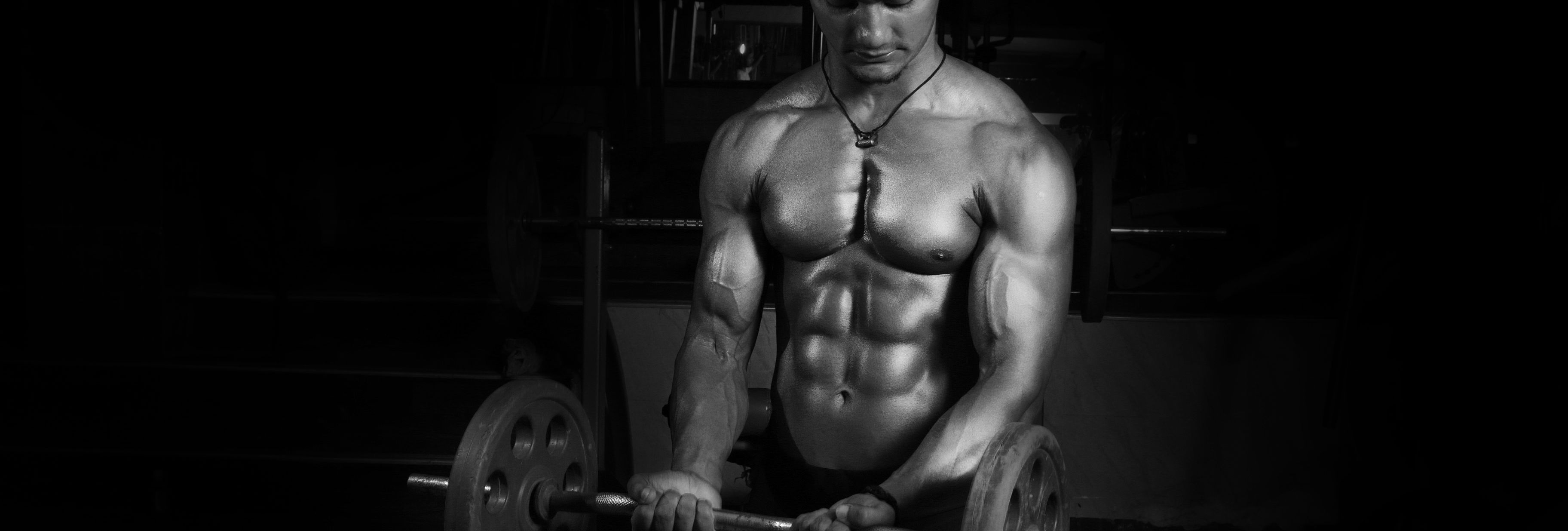
Your Forearms Are Doing the Talking You Think Your Face Is Having
Watch someone in a social setting for five minutes. When a man extends his hand to shake, when he reaches for his drink, when he adjusts his jacket, people are reading his hands. They are not consciously analyzing, but the subconcious assessment happens anyway. A strong grip and developed forearms signal physical capability, general strength levels, and functional fitness in ways that biceps and chest simply cannot match from across the room. If you are training your upper body and neglecting your grip strength training protocol, you are leaving the most socially visible display of power essentially untrained.
Forearm development affects how you are perceived before you speak, before you demonstrate any skill, before anything else happens. This is not vanity. This is the most primal form of social signaling working in your favor or against you. The solution is not complicated but it requires intention, because your current routine almost certainly does not address grip strength training adequately. Most trainees do a few sets of wrist curls and call it done. That is not a protocol. That is noise.
The Anatomy of Grip: Understanding What You Are Actually Training
Your forearms contain twenty distinct muscles, and they serve three primary grip functions. Crushing grip is the closed fist strength you use when shaking hands or gripping a steering wheel under stress. Pinch grip is the strength between your thumb and fingers, used when lifting objects with an open hand. Support grip is the ability to maintain a hold over time, which is why hanging from a bar is primarily a forearm exercise despite engaging your back and biceps.
The brachioradialis, the flexor carpi radialis, and the flexor carpi ulnaris are the muscles doing the visible work on the top of your forearm. But the deep finger flexors, the muscles that close your fingers around a bar or handle, are what create that dense, developed look that reads as strength from across a room. These muscles originate on the medial epicondyle of the elbow and run the full length of your forearm before attaching to your fingers. When they are developed, they create that thick, veined appearance that looks masculine and capable.
Grip strength training is unique because these muscles respond to extended time under tension better than they respond to heavy loads. You can deadlift three hundred pounds but lose your grip on a one hundred fifty pound bar if you have never trained the specific adaptation. Your forearms are endurance muscles masquerading as strength muscles, and your training should reflect that reality.
The Protocol: How to Actually Build Forearms That Matter
Stop doing wrist curls. This is the first and most important change to your grip strength training approach. Wrist curls isolate a joint angle and train a movement pattern that has almost no transfer to real world grip demands. Your forearms need to work through full ranges of motion, under load, for extended durations, and with varying intensity.
Start with the Farmer Carry as your foundation movement. Grab two heavy dumbbells or kettlebells, stand tall, and walk. Simple. Brutal. Effective. Walk forty meters, rest ninety seconds, repeat four times. Three sessions per week. That is the baseline. Once you can complete four sets of forty meters with a weight that challenges your grip at the end of each set, increase the load. Progressive overload applies to grip training the same as it applies to every other muscle group. The carry also forces your core and shoulders to stabilize under load, making it a superior movement for functional strength development.
Hanging from a pullup bar is your second essential movement. The support grip is often the weakest link in chain of grip strength, and it is the easiest to fix. If you cannot hang for thirty seconds, start with twenty and build. If thirty seconds is trivial, add weight with a dip belt or weight vest. The goal is to eventually hang for sixty to ninety seconds or longer with significant additional weight. This builds the thick forearms that look developed in short sleeves, and it transfers directly to every pulling exercise you perform.
The towel pull is the third essential. Throw a towel over a pullup bar, grab both ends, and pull. This movement combines crushing grip, pinch grip, and support grip simultaneously while also engaging your lats and biceps. Three sets of as many reps as you can manage. When this becomes easy, wet the towel. When that becomes easy, use two towels. The progression is endless and the grip demand is extreme. This is a movement powerlifters have used for decades specifically because it works.
Deadlift Variations: Training Grip Where You Actually Need It
Your deadlift is the most underutilized grip strength training tool available. Most trainees chalk up, grip the bar, and pull without considering that their grip is limiting their training. Once you stop letting your grip limit your deadlift, both improve. The solution is not straps. Straps have their place, but if you use them on every heavy deadlift set, you are soft in the hands and your forearms are not getting the signal to grow.
Alternate between three approaches. First, conventional double overhand grip on your working sets until your grip fails. When it fails, finish the rep with a hook grip or mixed grip rather than reaching for straps. Second, use double overhand grip for your warmup sets and reserve straps for your top working sets only. Third, dedicate one training day per week to grip intensive work where you use no straps and intentionally hold the bar longer at lockout. Thirty second holds at the top of your deadlift, three times per session, will transform your grip faster than any isolation work.
Plate pinches are the fourth movement you need. Set two plates smooth side out on the floor, pinch them together, and lift. This trains the pinch grip specifically and it is brutally difficult initially. Start with ten pound plates and work up. The strongest grip athletes can pinch three plates per hand. You will be humbled immediately, and that is the point. Train this twice per week for three sets each hand, holding the top position for twenty to thirty seconds.
Programming: The Weekly Structure That Actually Works
Forearms recover quickly. They are used constantly in your other training, which means they are getting indirect work every time you pull, row, or curl. This is both an advantage and a trap. The advantage is that a dedicated grip session does not need to be long. The trap is that if you do too much direct grip work, you will accumulate fatigue that compromises your other training.
Structure your week as follows. Monday: heavy deadlift and farmer carries. Wednesday: pulling day with towel hangs and plate pinches. Friday: grip intensive deadlift day with extended holds and no straps. That is three sessions totaling roughly forty five minutes of direct grip work. Supplement this with your regular training, where your forearms are engaged on every single pull, row, and curl movement. This combination provides more than enough stimulus for significant forearm development.
Do not train forearms to failure on every set. Two to three reps short of failure is the sweet spot that drives adaptation without accumulating excessive fatigue. Your forearms will adapt faster when you manage recovery properly, and recovery for grip muscles means not hammering them with high volume isolation work on top of your compound training. Less is more when it is structured correctly. Three sets of farmer carries with appropriate weight beats eight sets of wrist curls every single time.
The Details That Separate Good From Great Forearm Development
Wrist position matters more than most trainees realize. When you are doing any pulling movement, actively flex your wrists back toward your forearms. This is called active wrist, and it does two things. First, it puts the finger flexors in a stronger position mechanically, allowing you to hold more weight for longer. Second, it trains your forearms through a fuller range of motion, creating more muscle activation and better development. Most trainees let their wrists collapse into extension under load, which is both weaker and less effective for building the muscle.
Mind the elbow. The forearm muscles attach at the elbow, and elbow pain is common when grip training is increased too quickly. If you experience elbow pain, back off the intensity, add more rest between sessions, and ensure you are not letting your elbows hyperextend during carries or pulls. Eccentric loading of the elbow tendons takes longer to adapt than muscle tissue, so patience here is non negotiable. Ease into high intensity grip work over four to six weeks rather than trying to match your grip training volume to your deadlift volume immediately.
Grip strength is domain specific. Crushing grip improves fastest with crushing tasks. Support grip improves fastest with support tasks. Pinch grip improves fastest with pinching tasks. If you want overall strong hands that look developed and perform well in all situations, you need to train all three adaptations. This is why the farmer carry, the deadlift hold, and the plate pinch together create a complete grip training stimulus. Each addresses a different dimension of hand and forearm strength.
What This Actually Does for How You Show Up
You shake hands differently after three months of serious grip training. The confidence in that hand contact is different. The other person feels it. They do not analyze it or think about it, but their nervous system registers the signal of physical competence. This happens in professional settings, in social situations, in every moment where your hands are visible and engaged. The developed forearm creates an aesthetic impression that reads as masculine before your face, your clothes, or your words register in the other persons awareness.
The functional reality matches the aesthetic. You can open jars that used to give you trouble. You can carry groceries without your hands burning after fifty feet. You can hang from a ledge or a bar and not feel like your grip is your weakest link. Every manual task becomes easier because your hands and forearms are now a strength rather than a limitation. This confidence in physical capability changes how you carry yourself, which changes how other people perceive you, which changes the outcomes of social interactions in ways both large and small.
Your grip strength training protocol is not a supplement to your training. It is a missing pillar that you have been ignoring because it does not show up well in mirror selfies and it does not get the same media attention as chest and bicep training. But every person who matters, every person whose opinion you actually care about, will shake your hand, watch you handle objects, and make unconscious judgments about your physical capability based on what they see in your hands and forearms. Build them accordingly. Start with the farmer carries, add the hanging work, integrate the towel pulls, and deadlift without straps twice per week. Six months from now your forearms will be doing the talking your face does not need to.